
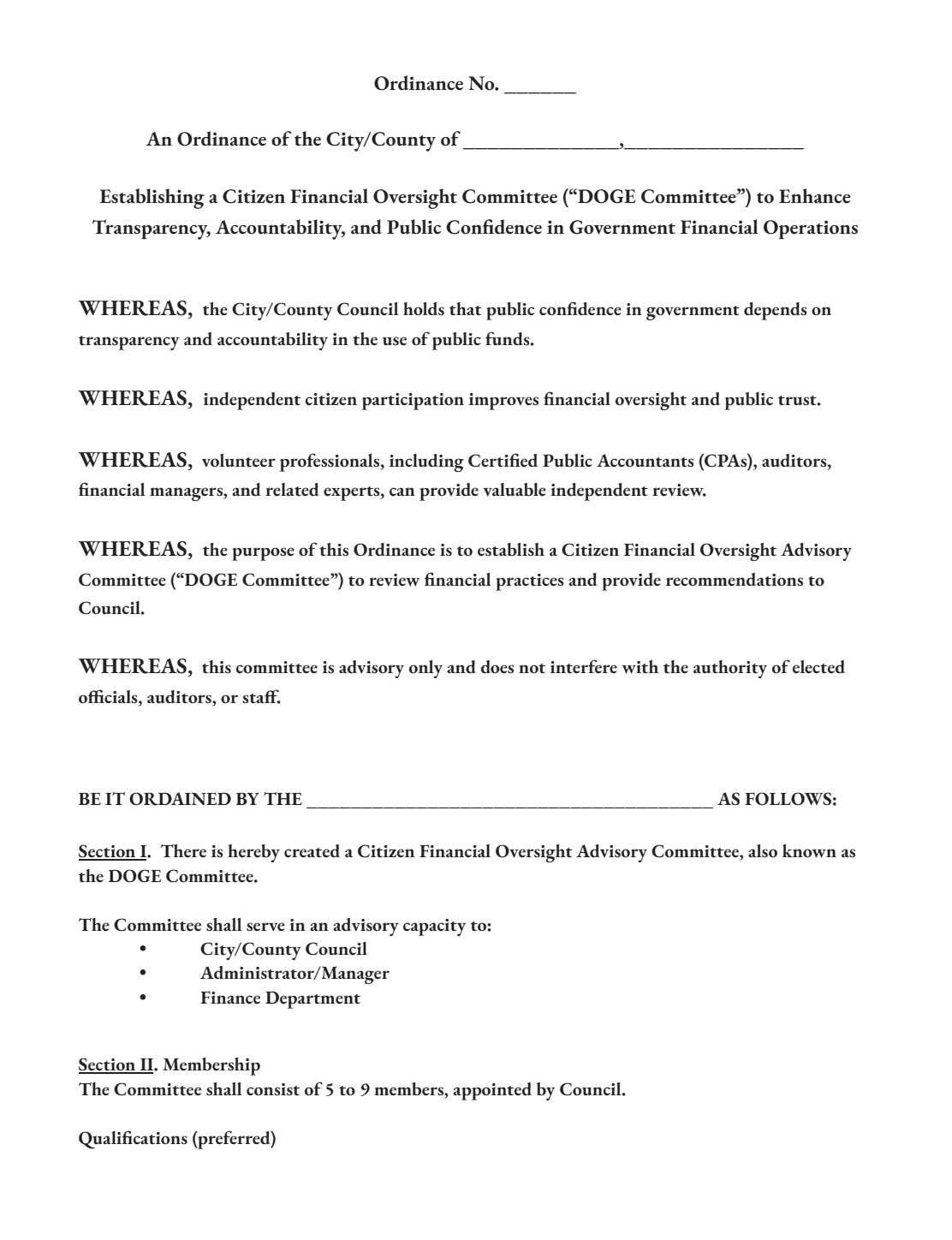
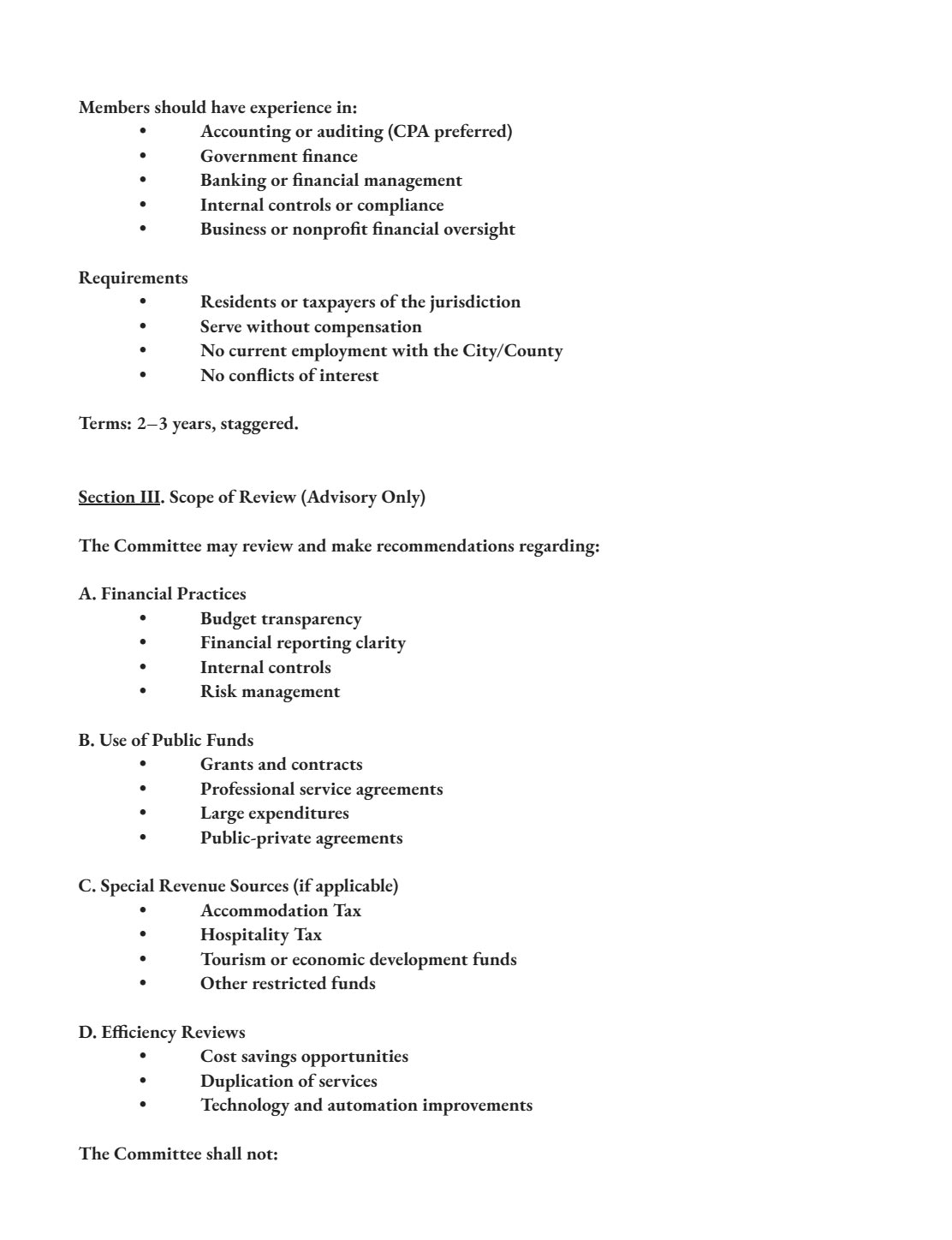
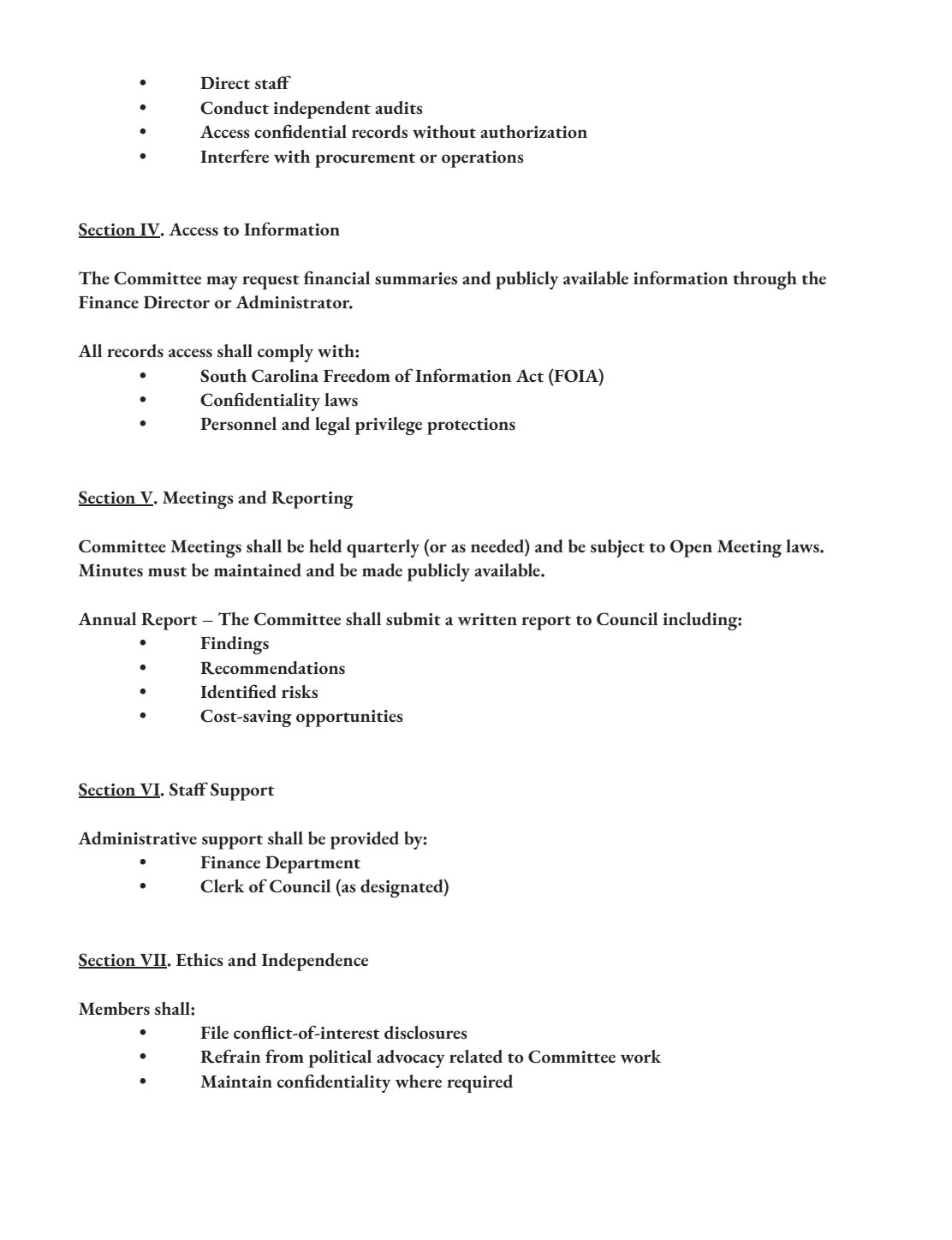
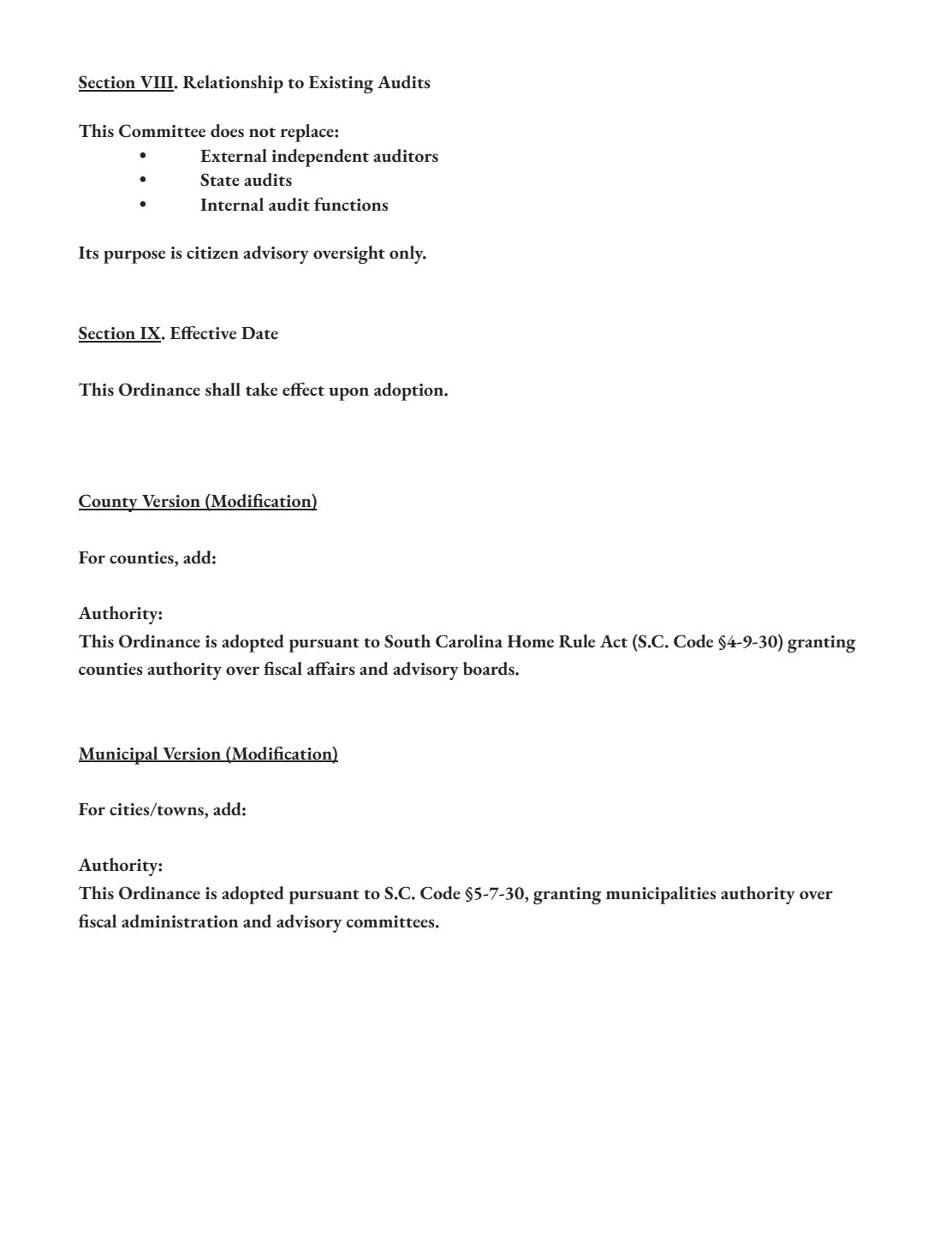
CityDoge for Mayors & City Councils



1. Appoint Independent Volunteer CPAs
Recruit local (or out-of-area) CPAs with:
- Municipal finance experience
- Audit / compliance experience (preferred)
- No conflicts of interest with town vendors, contracts, or insiders
2. Make the Committee Independent
Under CityDoge:
- The finance committee does not report to staff
- It reports directly to the Mayor and Council
- It provides public-facing summaries under FOIA/open records rules


3. Require Independent Budget Review
Before approval, the CityDoge Finance Committee reviews:
- Budget assumptions and line-item growth
- Vendor and contractor spending
- Legal fees, settlements, and unusual transfers
- Grant compliance and restricted funds
- “Off-book” accounts, authorities, and pass-through entities
4. Take Control of the Year-End Audit Process
The CityDoge Finance Committee—not staff—should:
- Select and hire the external auditor
- Require meaningful testing in high-risk areas
- Require management letter transparency and follow-up
- Recommend additional forensic or compliance reviews when needed


5. Publish Performance and Accountability Metrics
CityDoge creates a standard scorecard:
- Spending transparency
- Contract controls
- Procurement integrity
- Audit quality and independence
- Exceptions found and corrected
- Measurable performance outcomes
CityDoge Restores:

Taxpayer money should be protected like family money.
CityDoge makes that the standard.